Across the health professions, workforce conversations are becoming more common and more urgent. Policymakers and regulators alike are asking not only how many clinicians are licensed, but whether and where they practice, how they move, and how the workforce is changing over time. Answering those questions consistently begins with a shared foundation for data.
Cross-Profession Recognition of the Importance of Workforce Data: Cross-Profession Minimum Data Set (CPMDS)
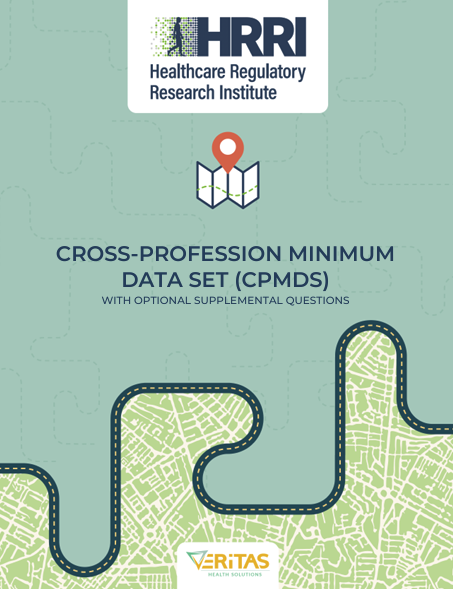
The Cross-Profession Minimum Data Set (CPMDS) was developed to address a longstanding challenge in health workforce research: the lack of standardized, comparable data across professions and jurisdictions. By identifying a core set of workforce variables that can be collected through licensure and renewal processes, the CPMDS provides a practical framework for generating data that is meaningful at both the state and national levels.
Several professions played an instrumental role in helping to shape CPMDS, recognizing the unique position regulators occupy in stewarding high-value workforce data. The framework reflects extensive collaboration across health professions and regulatory bodies, balancing analytic utility with operational feasibility.
Veritas Health Solutions has supported CPMDS-aligned efforts across multiple professions, working with professions (physical therapy and social work), state regulators and stakeholders to adapt the framework to real-world licensure environments. This work consistently reinforces a central lesson: when stakeholders align on what data they collect and why, workforce insights become more actionable, and far more valuable to decision-makers.
Growing Regulatory Interest in Workforce Data: At Home and Abroad
Interest in regulatory workforce data is not limited to U.S. states. In September 2025, this topic took center stage at the International Association of Medical Regulatory Authorities (IAMRA) Conference in Dublin, where leaders from around the world convened to discuss the evolving role of regulation in supporting health systems.
Our Veritas Health Solutions President Dr. Hannah Maxey presented on Regulatory Champions of Workforce Data: Lessons from the US and Ireland and Implications for the Global Health Workforce, highlighting how medical regulators are increasingly seen as trusted sources of workforce intelligence. The presentation drew on examples from U.S. medical boards and international counterparts, illustrating how licensure data (when structured intentionally) can support workforce mobility, planning, and policy decisions.
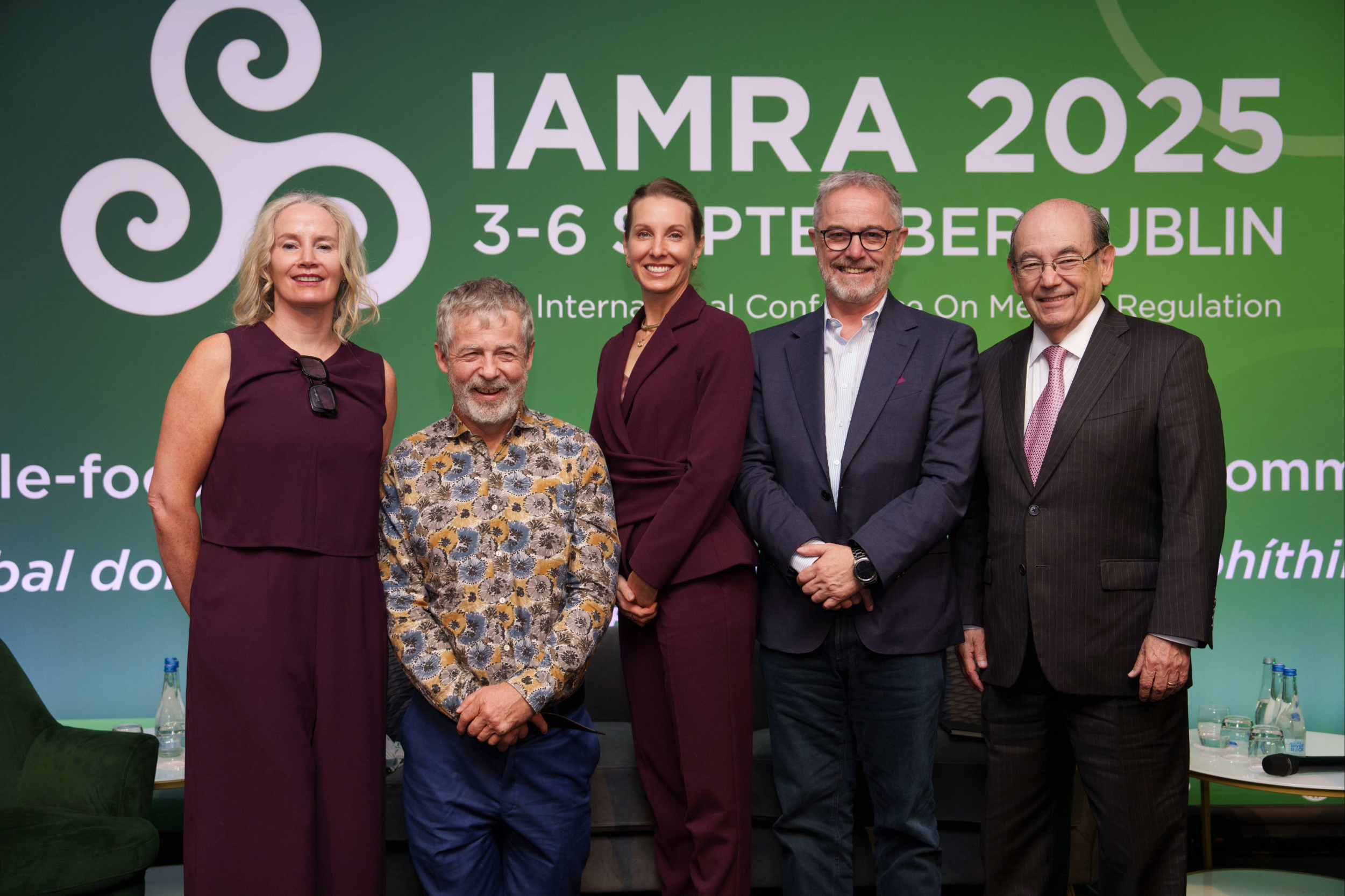
Dr. Maxey (center) alongside fellow keynote panelists for the discussion “Preparing Doctors of Tomorrow; Improving Access to Medical Training to Ensure they are Representative of the Communities they Serve.” Pictured left to right: Panel Facilitator: Dr. Suzanne Crowe, Chairperson Medical Council of Ireland; Panelists: Dr. Austin O’Carroll, Family Medicine Physician, Ireland; Dr. Hannah Maxey, President and Founder of Veritas Health Solutions; Mr. Jim Campbell, Director, Health Workforce at the WHO; Prof. Ricardo Leon-Borquez, President World Federation for Medical Education (WFME) – Mexico
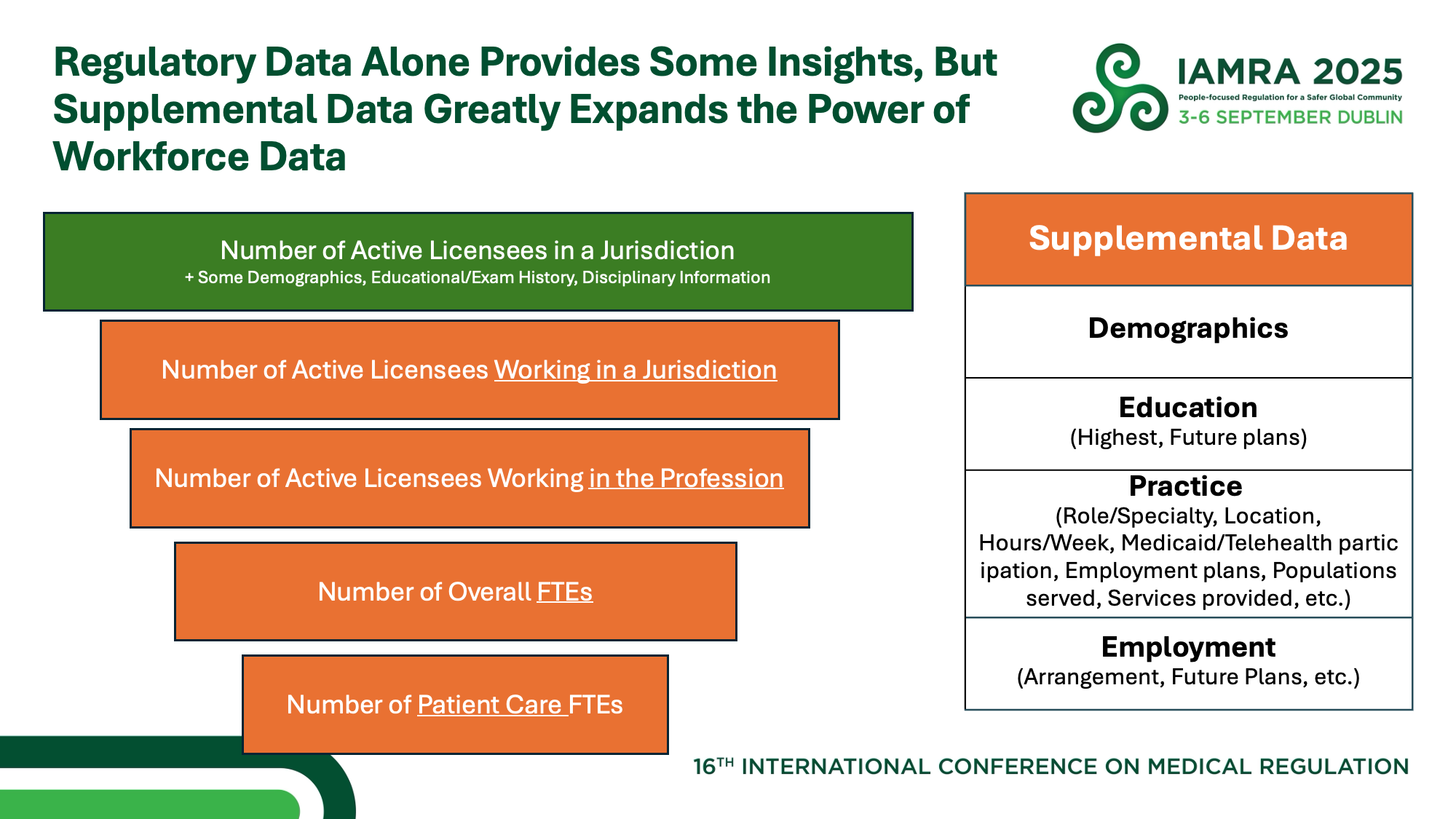
The above image was excerpted from Dr. Maxey’s presentation and demonstrates the value of having supplemental data to enhance the quality of workforce information available to support physician workforce policies, investments, and programs.
The global resonance of these conversations reflects a broader shift: regulators are being recognized not only for what they oversee, but for the insight their data and work can provide.
Turning Interest into Action: A New Grant Opportunity for Medical Boards
Building on this national and international momentum, the Federation of State Medical Boards Foundation has announced a new grant opportunity to support osteopathic and allopathic medical boards and other stakeholders in advancing medical workforce research within their communities. This grant is designed to support the kinds of workforce questions medical boards, schools, and the medical community are already being asked by policymakers, partner agencies, and the public. Across these areas of focus, access to consistent, well-structured licensure data is what makes meaningful analysis possible.
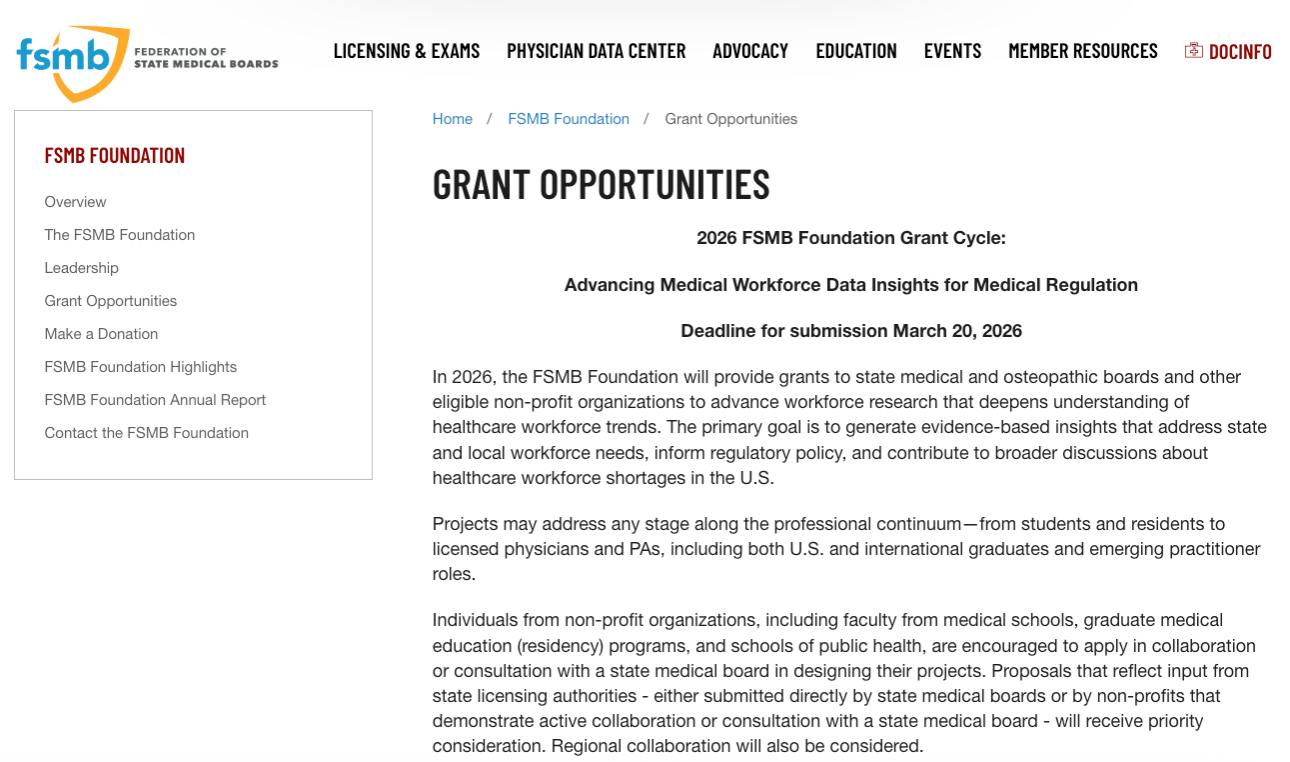
Below are some ideas as to how the FSMB Foundation’s sample topics of interest could be strengthened by core data elements, and how integrating these foundational data initiatives might strengthen application responses:
- Understanding how evolving models of medical licensure affect the workforce.
As alternative licensing pathways, expedited processes, and interstate mobility continue to expand, boards are increasingly asked how these changes affect workforce supply, distribution, and public protection. CPMDS-aligned data elements such as practice location, license type, and participation in clinical care can help boards examine how licensees enter, move within, and practice across jurisdictions, and whether newer pathways are shaping workforce patterns differently than traditional models.
- Examining geographic distribution and access to care.
Questions about where physicians practice, and why certain areas remain underserved, are central to workforce planning. Consistent location and practice-setting data collected through licensure can support analysis of urban–rural distribution, multi-state practice, and changes in practice location over time. When aligned with CPMDS, these data are easier to compare across professions or jurisdictions, strengthening conversations about access and regional workforce needs.
- Assessing changes in clinical participation and engagement.
Workforce data collected through licensure and renewal, particularly when standardized, can help boards understand not just how many physicians are licensed, but how they are practicing. CPMDS elements related to hours in clinical care, practice role, or setting can support trend analyses that inform broader discussions about burnout, retention, and workforce sustainability.
- Exploring how financial and policy environments influence workforce decisions.
Workforce data can help illuminate relationships between specialty choice, geographic practice patterns, and broader workforce trends.
- Understanding the impact of international medical graduates and new practitioner models.
As IMGs and newer practitioner roles continue to play a critical part in the workforce, boards are uniquely positioned to provide data that helps states understand these dynamics. CPMDS variables can be used to easily identify those practitioners trained internationally and support analyses of entry pathways, practice characteristics, and distribution, offering insight into how different practitioner groups contribute to workforce capacity.
- Placing today’s workforce challenges in historical context.
Boards often hold decades of licensure data that, when organized and standardized, can shed light on how the medical workforce has evolved over time. CPMDS provides a structure for identifying key variables that support longitudinal analysis, helping boards apply historical trends to current regulatory and workforce challenges.
Taken together, these lines of inquiry illustrate how CPMDS functions not as a stand-alone project, but as a practical way to strengthen the data foundation needed to answer the workforce questions already facing the medical community. The FSMB Foundation grant offers an opportunity to build or refine that foundation in service of real-world regulatory and policy decisions. Importantly, the opportunity recognizes that boards are at different points along this journey. Whether a state is just beginning to structure workforce data collection or seeking to make better use of data it already has, the grant provides flexibility to meet boards where they are.
A Signal of Commitment to Workforce Data
This grant opportunity represents more than new funding, it signals a continued commitment within the U.S. regulatory community to invest in workforce data and research as a public good. Following the development of CPMDS and growing international engagement around regulatory data, the FSMB Foundation’s support offers a concrete pathway for boards to advance these initiatives in ways that align with their regulatory mission.
Veritas Health Solutions was honored to review and provide guidance on this funding opportunity and is encouraged by its potential to strengthen workforce data and research at the state level. As medical stakeholders consider how best to leverage the grant, the opportunity stands as a clear demonstration of how shared frameworks, global dialogue, and targeted investment can come together to advance medical workforce intelligence.
For additional information about the opportunity, visit the FSMB Foundation grant opportunities page.