
Across the country, states are grappling with a common challenge: how to better understand and plan for the healthcare workforce serving their communities.
Policymakers are being asked to address workforce shortages, improve access to care, strengthen healthcare services, expand rural provider capacity, and invest wisely in education and training programs. Yet many states are making these decisions with incomplete, outdated, or fragmented workforce information.
As a result, growing numbers of states are exploring ways to collect workforce data directly through health professional licensure and license renewal processes. Rather than relying solely on ad hoc workforce surveys (which often suffer from low response rates and inconsistent participation), states are leveraging existing licensing infrastructure to create a more sustainable source of workforce information.
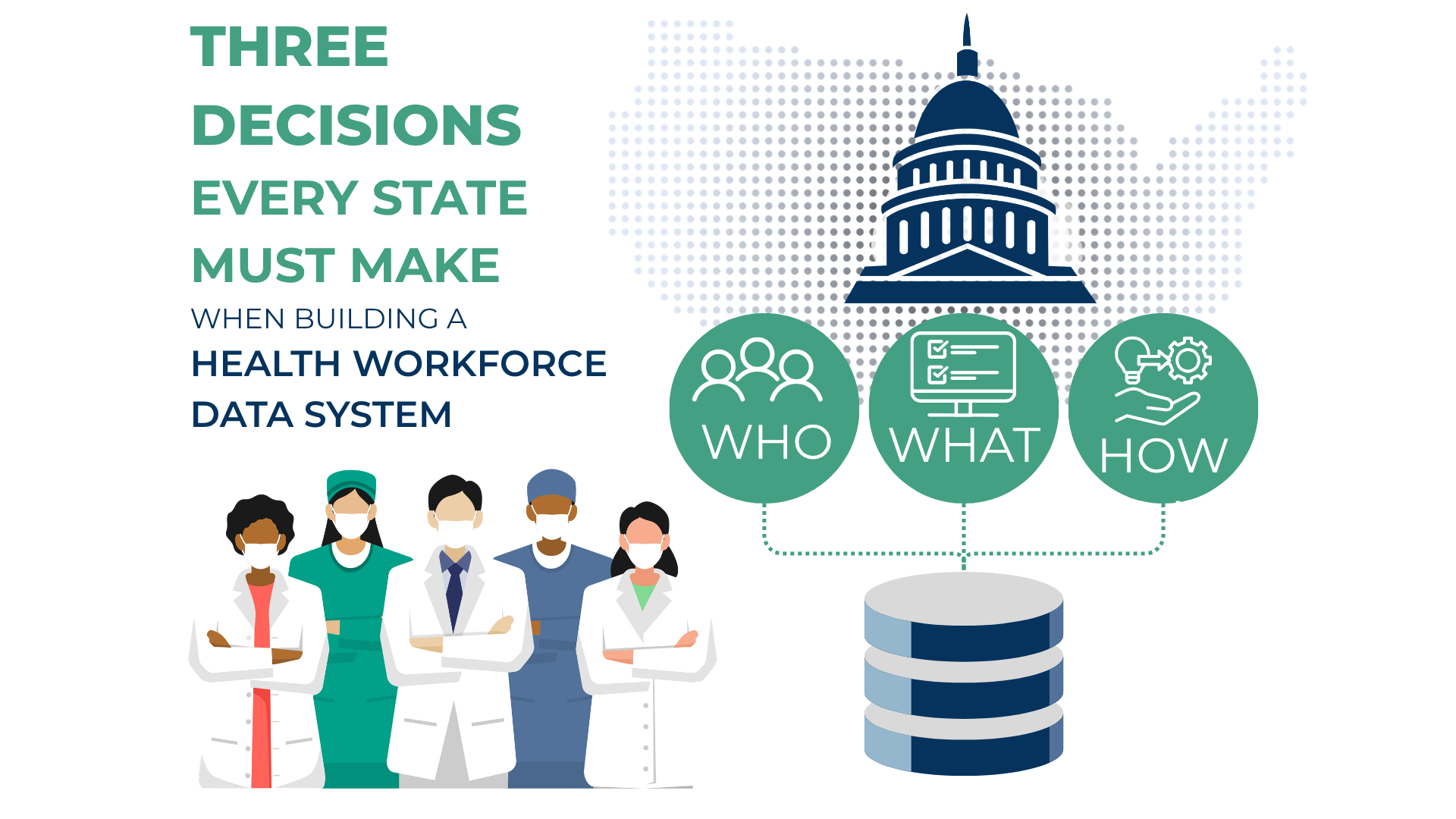
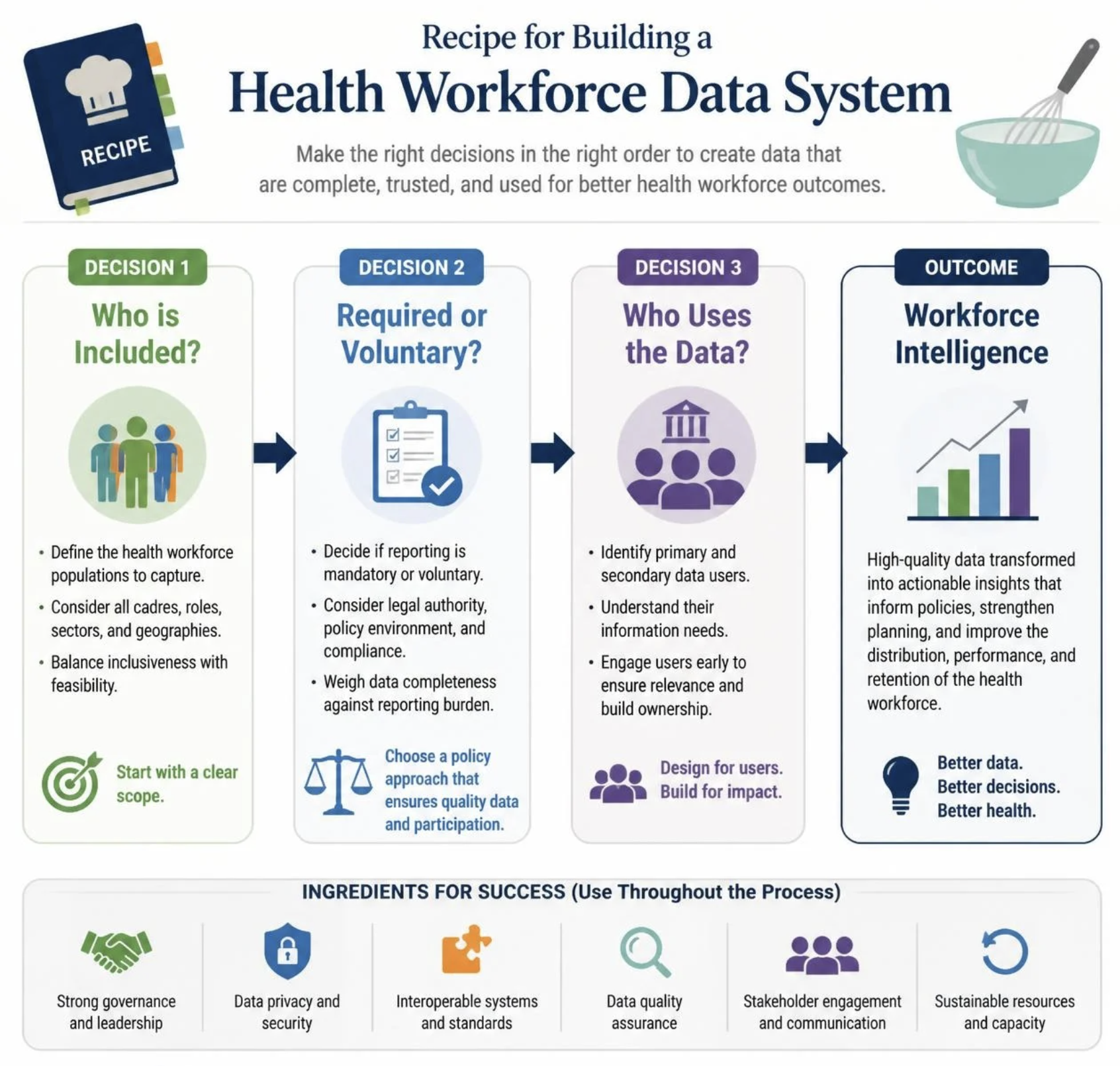
While implementation approaches vary, most states face three fundamental policy decisions when designing a health workforce data collection system.
Decision #1: Who Should Be Included?
The first decision is determining the scope of workforce data collection.
Some states pursue a comprehensive approach, collecting workforce information across a broad range of licensed health professions. The primary advantage of this model is that it creates a more complete picture of the healthcare workforce and allows policymakers to examine workforce trends across professions, settings, and geographic regions.
Other states begin with a more targeted approach, focusing on a specific profession or workforce segment experiencing significant shortages. Nursing, behavioral health, and physician workforces are common starting points.
Neither approach is inherently right or wrong.
A comprehensive model may maximize long-term value and support statewide workforce planning, but it often requires greater coordination and implementation effort. A targeted approach can be easier to launch and may allow states to pilot processes before expanding to additional professions.
The key question for policymakers is whether they are attempting to solve a profession-specific workforce challenge or build a broader workforce intelligence infrastructure that can support decision-making across the healthcare system.
Decision #2: Should Workforce Questions Be Required?
Once a state determines who will be included, the next question is whether workforce questions should be mandatory or voluntary.
States using a required-response model typically require licensees to complete workforce questions before a renewal can be finalized. These states often achieve higher completion rates and more representative datasets, providing greater confidence in workforce analyses and projections.
Other states utilize voluntary-response models, allowing practitioners to skip workforce questions without affecting licensure status. This approach may reduce concerns about administrative burden and can be easier to implement initially. However, voluntary systems often produce lower participation rates and may introduce response bias. If only certain segments of the workforce choose to participate, the resulting data may not accurately reflect workforce realities.
Ultimately, states must balance two competing priorities: maximizing participation while maintaining a positive experience for licensees. The appropriate approach often depends on a state’s regulatory environment, stakeholder support, and intended use of the data.
Decision #3: Who Will Turn Data Into Action?
Perhaps the most overlooked decision is determining what will happen and who will be responsible for analyzing, reporting, and using workforce data once it has been collected.
Collecting data is only the first step. Workforce data creates value when it informs decisions.
States have adopted a variety of governance structures. In some states, licensing boards maintain responsibility for both collection and reporting. In others, state health departments serve as the primary steward of workforce data and conduct statewide analyses to inform workforce planning efforts.
A growing number of states have also invested in dedicated workforce centers, commissions, or councils that provide specialized analytical capacity and coordinate workforce planning activities across agencies and professions.
Regardless of the model selected, successful workforce data systems require more than data collection. They require clear delegation of responsibilities, dedicated analytical expertise, and a commitment to translating information into actionable insights.
Without those components, workforce data can quickly become an underutilized administrative exercise rather than a strategic asset.
Moving from Data Collection to Workforce Intelligence
There is no single blueprint for building a state health workforce data system.
States differ in their licensing structures, workforce priorities, available resources, and political environments. As a result, successful systems often look different from one state to the next.
What successful states have in common is not a specific governance model or data collection method. Rather, they have made intentional decisions about scope, participation, and stewardship that align with their broader workforce goals.
As workforce shortages continue to challenge healthcare systems nationwide, the need for reliable workforce intelligence will only grow. States that invest in sustainable workforce data infrastructure today will be better positioned to make informed decisions about recruitment, retention, education, training, and access to care in the years ahead.
Key Takeaways
✓ States are increasingly using licensure systems to collect workforce data.
✓ Successful systems require decisions about scope, participation, and governance.
✓ There is no one-size-fits-all model.
✓ Data collection alone is insufficient; states need analytic capacity and clear stewardship.
✓ Workforce intelligence is the ultimate goal.
Stay tuned! If you’re curious about which states are capturing data during licensing and what authorities states might be using to do so, follow our page on LinkedIn to see next month’s blog where we’ll dive into the national landscape and share state examples.